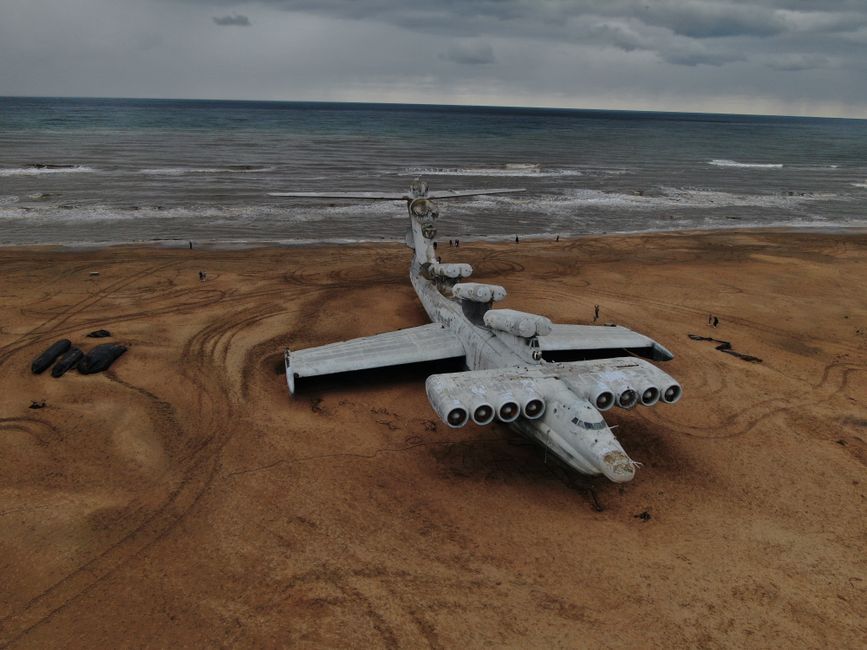
Ukraine struck an Iranian-linked merchant vessel in the Caspian Sea, prompting strong threats of retaliation from Iran. This escalation directly threatens the International North-South Transport Corridor (INSTC), a crucial trade route for India.
July 25, 2026
Ukraine Attack Date
⏳ Time Machine
How today’s news fits into the bigger picture
September 2000
INSTC Established by India, Russia, Iran
India, Russia, and Iran formally agreed to establish the International North-South Transport Corridor (INSTC) to create a shorter, more cost-effective multimodal trade route. This 7,200-kilometer network was designed to connect the Indian Ocean with Northern Europe via the Caspian Sea.
2014
INSTC Dry Runs Showed Major Savings
Initial dry runs conducted along the INSTC demonstrated its economic viability, proving that the corridor could reduce transportation costs by 30% and cut transit times by 40% compared to traditional routes like the Suez Canal.
January 2026
INSTC Sees Significant Trade Volume Growth
The INSTC showcased impressive growth, with its overall traffic volume increasing by 19% in 2024. Trade between India and Russia using the corridor almost doubled, highlighting its increasing role in bilateral economic relations.
July 2026
Red Sea Disruptions Highlight INSTC Importance
Ongoing disruptions and attacks in the Red Sea and Strait of Hormuz have underscored the critical importance of the INSTC as a viable and secure alternative for India's trade, making its stability even more crucial.
Today
Ukraine attacked an Iranian vessel in the Caspian Sea, prompting threats from Iran and raising concerns for India's INSTC trade corridor.
What happens next?
Iran's response is uncertain, but could further destabilize shipping and trade routes, potentially impacting India's trade and investments in the INSTC.
A Ukrainian long-range drone attack on an Iranian merchant vessel in the Caspian Sea on July 25, 2026, has ignited significant geopolitical tensions. The strike, which killed one sailor and injured another, was met with furious condemnation from Iran's Foreign Minister, Ali Abbas Araghchi, who labeled it a 'hostile and criminal act' and warned it 'cannot go unanswered.' This event is critical for India because the Caspian Sea is an integral part of the 7,200-kilometer International North-South Transport Corridor (INSTC), a multimodal network connecting India, Iran, Russia, Europe, and Central Asia. Disruptions in this strategic waterway could severely impact India's efforts to diversify its trade routes and reduce reliance on traditional, often more expensive, paths like the Suez Canal. The incident highlights how the conflicts in Ukraine and the Middle East are intertwining and expanding into new geographies, creating new vulnerabilities for global supply chains.
💭 If you're wondering…
The International North-South Transport Corridor (INSTC) is a 7,200-kilometer network of ship, rail, and road routes. It connects India, Iran, Russia, Europe, and Central Asia, aiming to provide a shorter and cheaper alternative for freight movement than traditional sea routes.
Did this story help?
Official sources
- Newsweek: Ukraine Hit an Iranian-Linked Vessel in the Caspian Sea—Why It Matters ↗
- Global News: Iran threatens response to Ukraine attack on its ship in Caspian Sea ↗
- Chosunbiz: Ukraine strikes Iran-linked ships in Caspian as tensions widen across Eurasia ↗
- Sberbank India: INSTC in Focus – Faster, Cheaper Logistics for Russia-India Trade ↗
- Vertex AI Search: How Russia-Ukraine war spreading to Caspian Sea threatens key India-linked corridor ↗
Knowledge Chain — tap a concept